25 Weird, Wonderful and Unique Things to See in Paris

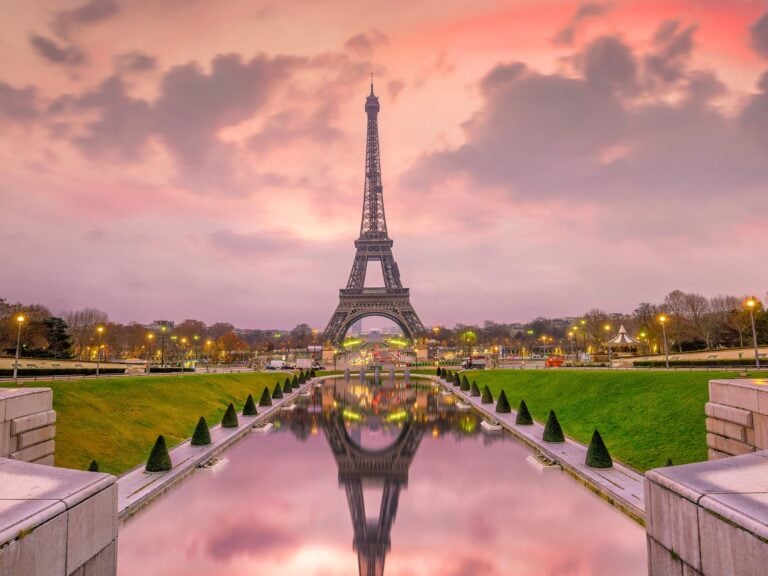
Paris beyond the Eiffel Tower reveals itself slowly, if you know where to look. These aren’t just “alternative” attractions—they’re the places that show you a different side of the city, the weird corners and unexpected discoveries that most tourists walk right past. Here you’ll find a collection of my personal favorite spots.
1. Salvador Dalí’s Sundial
Dalí himself rode up on a bucket truck with his pet ocelot to unveil this surrealist sundial in 1966. The scallop-shell face (with blue flaming eyes and hair shaped like his signature mustache) references the St. Jacques pilgrimage route. The best part? It doesn’t actually work—which feels perfect for the artist who painted melting clocks.
Location: 27 Rue Saint-Jacques, 75005 (Latin Quarter)
Metro: Cluny-La Sorbonne (Line 10)
2. The Paris Catacombs

Six million skeletons arranged in neat rows and decorative patterns deep underground. This isn’t some dusty ossuary—it’s an entire subterranean network where 18th-century engineers solved Paris’s overflowing cemetery problem by stacking bones with geometric precision. Book ahead to skip the line; only 200 people are allowed inside at once.
Location: 1 Avenue du Colonel Henri Rol-Tanguy, 75014
Metro: Denfert-Rochereau (Lines 4, 6, RER B)
3. 59 Rivoli Artist Squat
What started as an illegal art squat in an abandoned bank building became so popular (40,000 visitors annually) that the city legalized it in 2006. Now 30 artists work in colorful studios across six floors. Watch them create, buy affordable original art (€10-30), and experience Paris’s underground art scene without the underground legality issues.
Location: 59 Rue de Rivoli, 75001
Metro: Châtelet (Lines 1, 4, 7, 11, 14)
Hours: Tuesday-Sunday, 1pm-8pm (Free entry, donations appreciated)
4. Arènes de Lutèce

A Roman amphitheater from the 1st century, hiding in plain sight in the 5th arrondissement. Locals play boules where gladiators once fought. Free to enter, rarely crowded, and one of the few remaining pieces of Roman Paris. The modern city was built right over it until it was rediscovered in the 1800s.
Location: 49 Rue Monge, 75005
Metro: Place Monge (Line 7) or Cardinal Lemoine (Line 10)
5. La Petite Ceinture (The Little Belt)
Abandoned railway that circled Paris from 1862 to 1964, now reclaimed by wildflowers and street art. Certain sections have been legalized as linear parks—particularly near Parc Georges Brassens (15th), where you can walk the old tracks legally. Other sections remain deliciously forbidden urban exploration territory.
Location: Multiple access points; legal section at Passage de la Petite Ceinture, 75015
Metro: Convention (Line 12)
6. Musée de la Chasse et de la Nature (Museum of Hunting and Nature)
Equal parts natural history museum and surrealist art installation. Taxidermied animals coexist with contemporary art in a 17th-century mansion. There’s a room dedicated to mythical creatures. It’s weird, beautiful, and entirely unlike any other museum in Paris, which is why I love it!
Location: 62 Rue des Archives, 75003 (Marais)
Metro: Rambuteau (Line 11)
7. The Secret Vineyard of Montmartre (Clos Montmartre)

Paris still produces its own wine in the heart of Montmartre. This 2,000-vine vineyard dates to Roman times and has produced a vintage every year since 1933. You can see it year-round from rue des Saules, but the real magic happens during the October harvest festival when bottles with artist-designed labels get auctioned off.
Location: Rue des Saules/Rue Saint-Vincent, 75018
Metro: Lamarck-Caulaincourt (Line 12)
8. Musée des Égouts (Paris Sewer Museum)
The sewers are actually cleaner and less smelly than you fear. This museum explores how Baron Haussmann’s 2,100km underground network revolutionized Paris’s sanitation. Each sewer tunnel is marked with a replica of the street sign above—unexpectedly fascinating infrastructure history.
Location: Pont de l’Alma, Esplanade Habib Bourguiba, Quai d’Orsay, 75007
Metro: Alma-Marceau (Line 9)
Note: Wear closed shoes
9. Musée de la Magie (Museum of Magic)
Two tiny museums in one building: magic tricks, optical illusions, wizard hats, and vintage automata that still work. Regular magic shows make this especially great if traveling with kids. Located in the Marais, perfect for post-falafel exploration.
Location: 11 Rue Saint-Paul, 75004
Metro: Saint-Paul (Line 1)
10. Rue Crémieux

Rue Crémieux is Paris’s most colorful street, and it feels like stepping into a pastel village portal. Brightly painted houses with potted flowers and shutters line this tiny residential street. Residents tolerate Instagram tourism but remember—people actually live here. Be respectful, quiet, and quick.
Location: Between Rue de Lyon and Rue de Bercy, 75012
Metro: Gare de Lyon (Lines 1, 14, RER A, D)
11. The Anne Frank Garden

Hidden at the end of a dead-end alley, this secret Paris garden honors Anne Frank with a horse chestnut tree grafted from the original she admired from her Amsterdam window. Peaceful, poignant, and discovered only by those who persevere past the impasse entrance.
Location: 14 Impasse Berthaud, 75003
Metro: Rambuteau (Line 11)
12. Promenade Plantée (Coulée Verte)

Paris’s answer to New York’s High Line came first—built on an abandoned 1859 railway viaduct. This 4.7km elevated garden winds through tunnels, over bridges, and past hidden courtyards. Wildflowers, ivy-covered arches, and unique rooftop perspectives of Paris neighborhoods.
Location: Access at Avenue Daumesnil or Bastille, 75012
Metro: Bastille (Lines 1, 5, 8) or Daumesnil (Line 6)
13. Square du Vert-Galant

Named after King Henri IV’s nickname, this triangular garden at the tip of Île de la Cité sits below street level—literally. One of the most romantic spots in Paris, with Seine views in three directions. Mature trees, lawn for lounging, and that secret-spot feeling despite being in the heart of the city.
Location: 15 Place du Pont Neuf, 75001
Metro: Pont Neuf (Line 7)
14. Musée Gustave Moreau
The former home-studio of Symbolist painter Gustave Moreau, preserved exactly as he left it. Ornate, mysterious, sometimes ostentatious paintings cover every wall. The spiral staircase between floors is alone worth the visit. Not for everyone—but fans of 19th-century mysticism will be mesmerized.
Location: 14 Rue de La Rochefoucauld, 75009
Metro: Trinité-d’Estienne d’Orville (Line 12)
15. Musée des Arts Forains (Fairground Museum)
Nineteenth-century carnival equipment you can actually operate. Located in former wine warehouses, this private museum displays restored carousels, carnival games, and fairground attractions. Every piece works—visits by guided tour only, adding to the exclusive fairground atmosphere.
Location: 53 Avenue des Terroirs de France, 75012 (Bercy Village)
Metro: Cour Saint-Émilion (Line 14)
Note: Guided tours only, book ahead
16. Montmartre Cemetery

Less famous than Père Lachaise but just as beautiful and significantly less crowded. Final resting place of artists, writers, and composers, including Dalida, François Truffaut, and Émile Zola. The cemetery sits below street level in a former gypsum quarry, giving it a unique sunken atmosphere.
Location: 20 Avenue Rachel, 75018
Metro: Place de Clichy (Lines 2, 13)
17. Jardin des Rosiers-Joseph Migneret
Three interconnected gardens hiding behind historic Marais mansions. The main entrance looks like it leads to an apartment building—that’s the point. Inside, you’ll find remains of Philippe Auguste’s 13th-century city wall, fruit trees, vegetable gardens, and locals enjoying their falafel from rue des Rosiers.
Location: 10 Rue des Rosiers, 75004
Metro: Saint-Paul (Line 1)
18. Musée de l’Éventail (Fan Museum)
Dedicated entirely to fans (the folding kind, not people who admire things). This tiny museum in a 19th-century workshop displays the history of fan-making from the 17th century forward. Still functions as a working fan restoration workshop.
Location: 2 Boulevard de Strasbourg, 75010
Metro: Strasbourg-Saint-Denis (Lines 4, 8, 9)
19. The Covered Passages (Galerie Vivienne & Passage des Panoramas)

Nineteenth-century shopping arcades with glass roofs, mosaic floors, and old-world charm. Galerie Vivienne is the most beautiful IMO; Passage des Panoramas (opened 1799) is the oldest. Both are filled with boutiques, bistros, and bookshops—indoor streets frozen in time.
Galerie Vivienne: 6 Rue Vivienne, 75002 (Metro: Bourse, Line 3)
Passage des Panoramas: 11 Boulevard Montmartre, 75002 (Metro: Grands Boulevards, Lines 8, 9)
20. Parc Bagatelle

Way out in the Bois de Boulogne, far from any metro, sits this botanical paradise with a famous rose garden (over 1,000 varieties), water features, a Chinese pagoda, and free-roaming peacocks. Worth the trek for garden enthusiasts. The Château de Bagatelle was built in 1777 on a bet.
Location: Bois de Boulogne, 75016
Metro: Porte Maillot (Line 1) then bus 244
21. Musée Édith Piaf
Tucked into Piaf’s former apartment in working-class Belleville, this tiny, free museum houses her signature black dress, concert posters, personal letters, and memorabilia. Run by fans and friends of the legendary singer. Intimate, moving, and unknown to most tourists.
Location: 5 Rue Crespin du Gast, 75011
Metro: Ménilmontant (Line 2)
Hours: Monday-Thursday, 1pm-6pm (by appointment, call ahead)
Admission: Free
22. Musée de la Minéralogie
Since 1794, this museum has been hoarding 80,000 minerals, gems, and meteorites. Located at the École des Mines, it’s old-fashioned in the best way—like discovering your eccentric geologist uncle’s lifetime collection organized by a Victorian curator.
Location: 60 Boulevard Saint-Michel, 75006
Metro: Luxembourg (RER B)
23. La Butte-aux-Cailles
A hilltop village neighborhood in the 13th that feels completely separate from Paris. Cobblestone streets, independent restaurants, street art covering every surface, and a natural spring-fed swimming pool. La Petite Alsace (hidden courtyard of Alsatian-style houses) sits within this already-hidden neighborhood.
Location: 13th arrondissement
Metro: Corvisart (Line 6) or Place d’Italie (Lines 5, 6, 7)
24. Abbey Bookshop
Shakespeare & Company gets all the fame, but this quirky, overstuffed Canadian bookshop in the Latin Quarter offers better browsing and friendlier vibes—mountains of English books, Canadian hospitality, free coffee, and zero tourist crowds. Five minutes from the famous spot everyone photographs.
Location: 29 Rue de la Parcheminerie, 75005
Metro: Saint-Michel (Line 4, RER B, C)
25. Musée du Compagnonnage
Hidden in Saint-Germain-des-Prés, this museum explains France’s ancient craftsmen guilds (compagnonnage) that still preserve traditional skills passed down through centuries. Masterwork examples of stonework, carpentry, and ironwork show techniques modern craftspeople still study. Deeply French, rarely visited.
Location: 1 Rue Mabillon, 75006
Metro: Mabillon (Line 10)
The Real Secret
These places exist because Paris rewards curiosity. The city layers history on top of history, hiding gardens behind mansions, turning abandoned infrastructure into art spaces, and preserving quirky museums about fans and minerals alongside the Louvre.
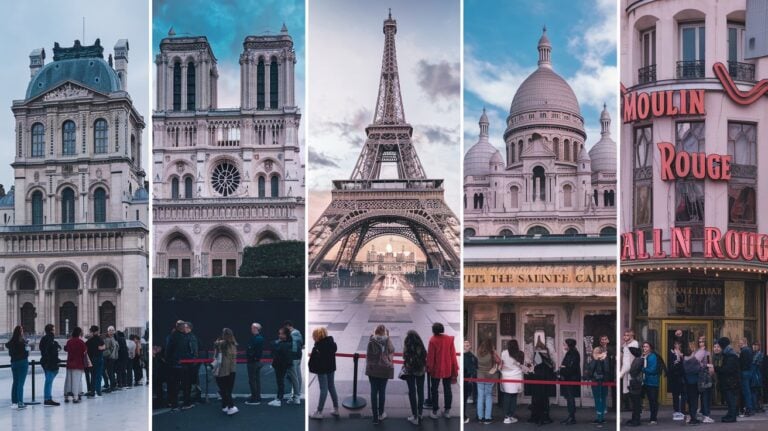
Most tourists follow the popular Paris hits loop: Eiffel Tower, Arc de Triomphe, Notre-Dame, Louvre. That’s fine for a first visit—those monuments earned their fame. But return visitors discover the real magic happens in impasses that dead-end into gardens, on colorful residential streets where locals actually live, in tiny museums curated by obsessive collectors.
The weird and wonderful side of Paris is best found by wandering down the wrong street at the right time, by following that intriguing doorway, by asking “what’s down here?” when everyone else walks past.
Happy hunting.