Big Mac Meets Belle Époque: Paris’s Most Unusual McDonald’s
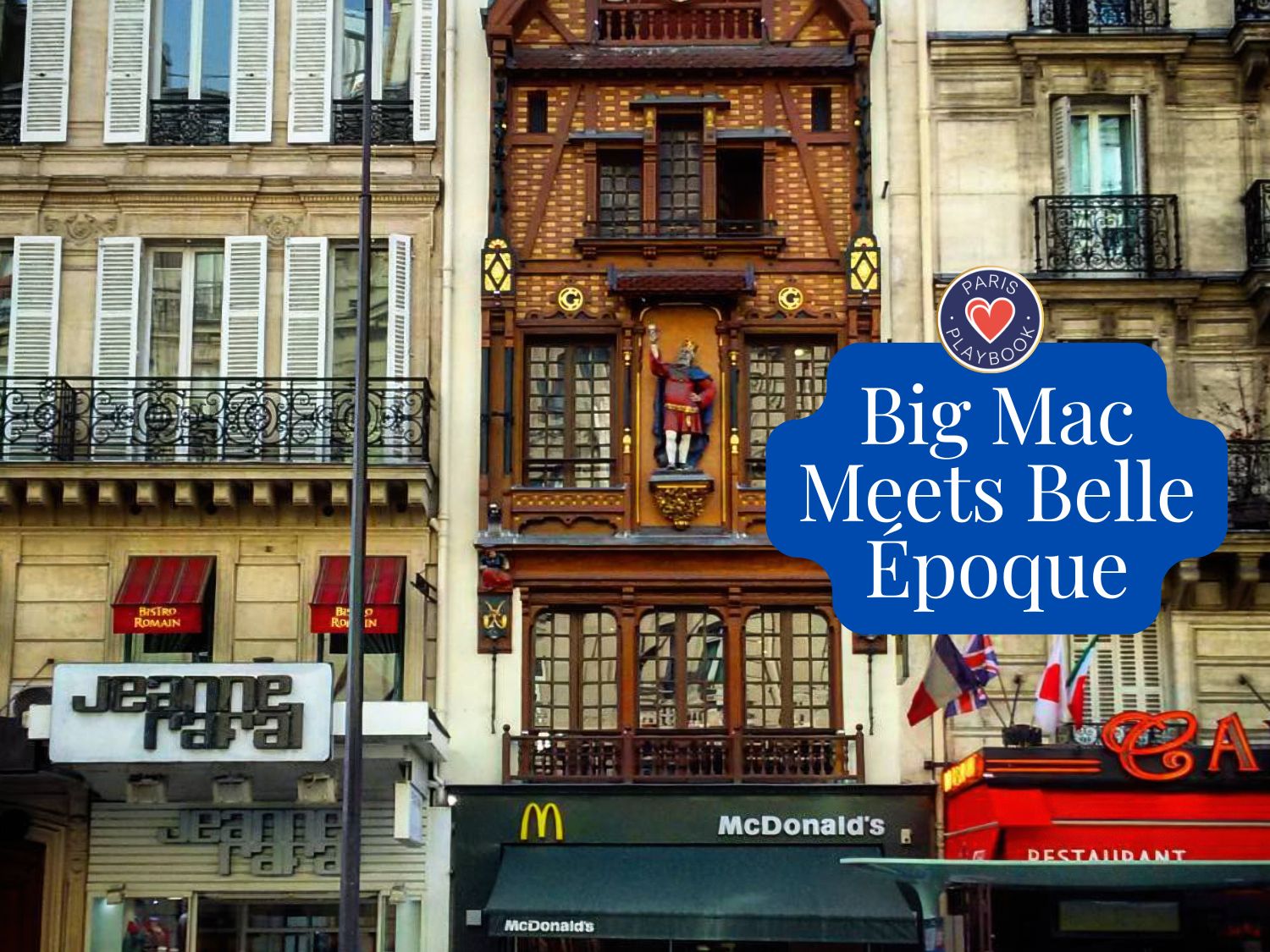
Welcome to 119 rue Saint-Lazare, home to what might be the world’s most historically significant McDonald’s – and definitely Paris’s most architecturally surprising fast-food restaurant.
When History Meets Happy Meals
This isn’t just any McDonald’s with quirky decor. The building housing this “MacDo” (as it’s known in France) is a bona fide Historical Monument, protected by the French state since 1997. You’re literally eating a Big Mac inside a piece of protected heritage.
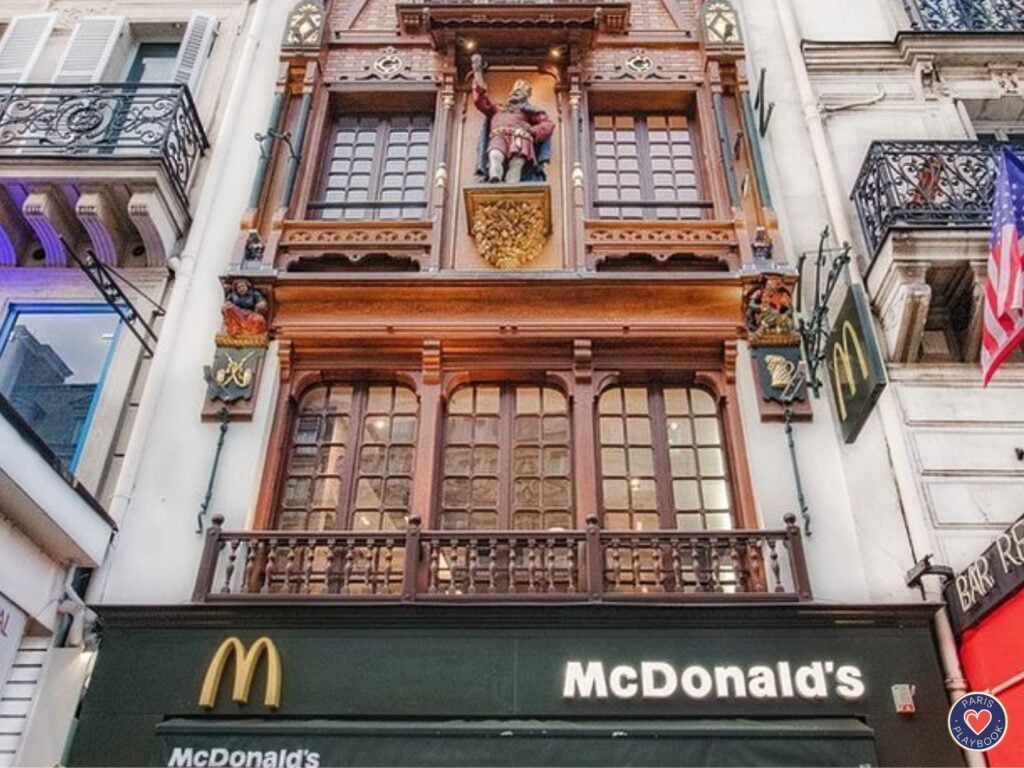
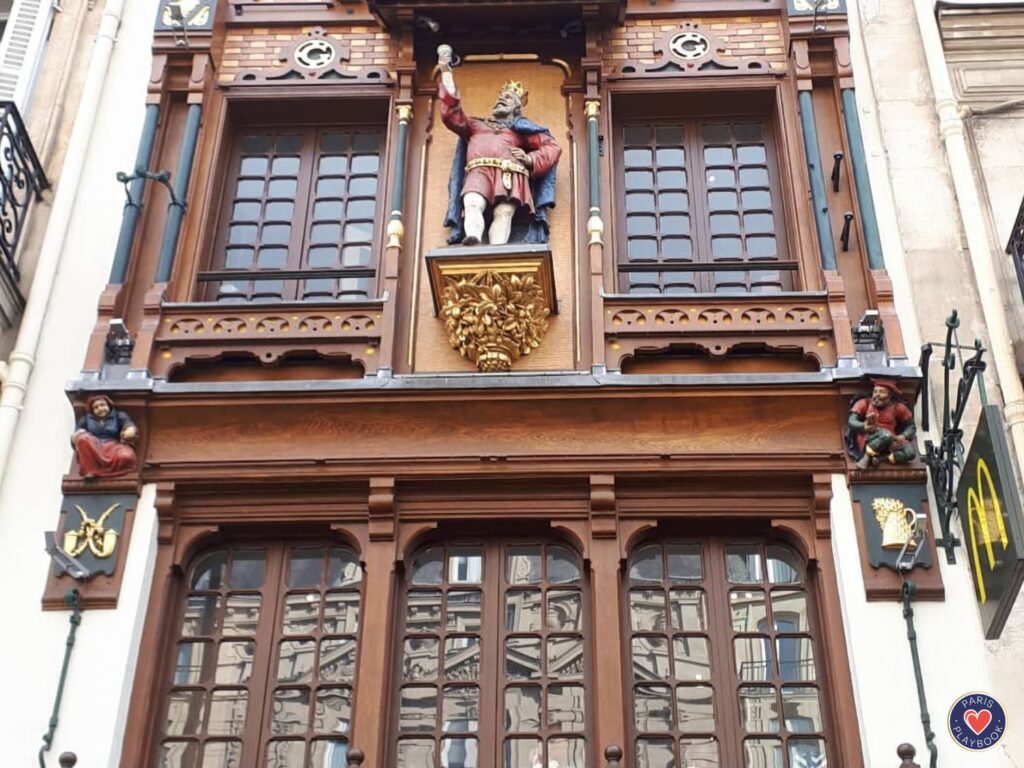
The narrow facade, squeezed into a plot just 10 meters wide, features all the hallmarks of Alsatian architecture: half-timbered construction, decorative brickwork, traditional motifs including sunflowers and poppies, and that distinctive steep-pitched roof crowned by a statue of a stork.
But the real star of the show is Gambrinus, the legendary “King of Beer,” whose pot-bellied statue dominates the center of the facade, eternally raising his beer stein as if toasting the peculiar fate that transformed his brewery into a burger joint.
The Belle Époque Beer King
To understand how we arrived at this point, we must travel back to 1871, when the Franco-Prussian War concluded with the annexation of Alsace-Lorraine by the German Empire. Thousands of Alsatians fled to Paris, bringing their culinary traditions with them and establishing brasseries throughout the capital.
One of these refugees was restaurateur Jacqueminot-Graff, who in 1892 commissioned architect L. Chausson to build a modest restaurant. Two years later, architect Paul Marbeau completely transformed the facade, creating the Alsatian fantasy we see today for the brasserie “Au Roi de la Bière” (The King of Beer).
The timing was perfect. Alsatian brasseries were all the rage during the Belle Époque. This eye-catching facade was essentially 19th-century marketing genius – a way to stand out on a busy Parisian street and immediately signal the restaurant’s regional specialties.
Literary Legends and Beer Steins
For over a century, “Au Roi de la Bière” served as a genuine piece of Parisian cultural life. The brasserie welcomed literary heavyweights, including Dos Passos, Ezra Pound, and Ernest Hemingway, who presumably found the Alsatian atmosphere conducive to both drinking and writing.
The restaurant continued operating until 1994, when it finally closed its doors after more than 100 years of service. For four years, the building sat empty, its future uncertain.
McDonald’s to the Rescue
In 1998, McDonald’s stepped in with an offer that surprised everyone: they would take over the space and fund a complete restoration overseen by France’s Bâtiments de France – the organization responsible for protecting historical monuments.
The renovation was no casual affair. Conservation experts and chief architects meticulously restored the facade, preserving every detail from Gambrinus’s beer stein to the stork perched on the chimney. McDonald’s reportedly invested significant funds to ensure the restoration met France’s exacting heritage standards.
The Gambrinus Legend
Central to the building’s charm is the statue of Gambrinus, whose legend adds a layer of folklore to your fast-food experience. According to Flemish legend, Gambrinus was a heartbroken bell-ringer who made a deal with the devil: his soul in exchange for hops seeds and the secret to brewing the world’s best beer. The devil’s bargain worked – Gambrinus became the legendary King of Beer, forever associated with brewing traditions across Northern Europe.
Today, instead of presiding over flowing steins of beer, Gambrinus watches over flowing streams of tourists photographing this architectural oddity while clutching their McFlurries.
A Living Contradiction
The contrast couldn’t be more striking: a meticulously preserved 19th-century Alsatian facade housing 21st-century American fast food. It’s precisely the kind of cultural mashup that makes Paris endlessly fascinating.
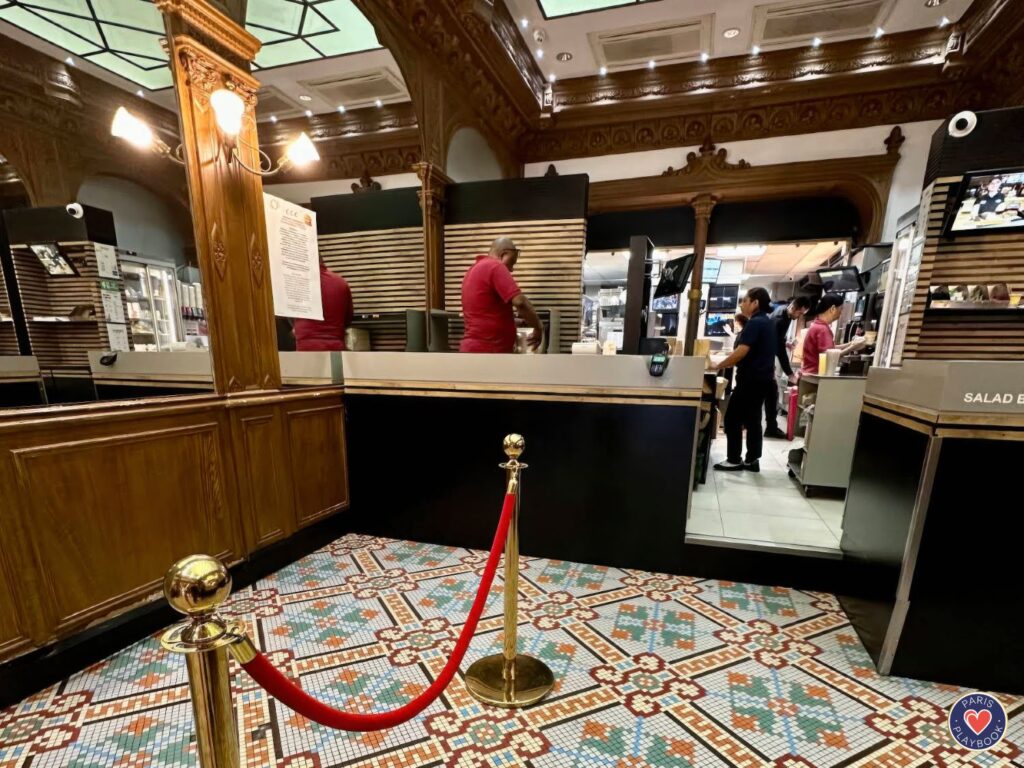
Inside, McDonald’s has maintained the spirit of preservation, keeping the three original ground-floor dining rooms with their period details while adapting the space for modern service. The result is probably the most elegant McDonald’s dining experience you’ll ever have.
Why This Matters
This isn’t just a quirky tourist attraction – it’s a perfect example of how Paris handles its architectural heritage. Rather than let a historically significant building decay or demolish it for something modern, the city found a way to preserve it while giving it new life.
The McDonald’s Saint-Lazare proves that heritage preservation doesn’t always require museum-like sanctity. Sometimes the best way to save a building is to let it continue serving its community, even if that means serving burgers instead of beer.
The Tourist Magnet
Today, the McDonald’s at 119 rue Saint-Lazare attracts a steady stream of curious visitors who come as much for the architecture as the food. It’s become a legitimate stop on unofficial “unusual Paris” tours, attracting photographers, architecture enthusiasts, and anyone who appreciates the delightful absurdity of eating fast food in a Historical Monument.
For many visitors, it represents Paris at its most charmingly contradictory – a city that can seamlessly blend preservation with pragmatism, tradition with modernity, and Belle Époque grandeur with Big Mac convenience.
Whether you’re grabbing a quick meal before catching a train at nearby Gare Saint-Lazare or specifically seeking out Paris’s most architecturally interesting McDonald’s, this little Alsatian house stands as proof that sometimes the most unexpected combinations create the most memorable experiences.
After all, where else can you order a Happy Meal while admiring a statue of the legendary King of Beer?
McDonald’s Saint-Lazare
Address: 119 rue Saint-Lazare, 75008 Paris
Nearest Metro: Saint-Lazare (Lines 3, 9, 12, 13, 14, RER E)
Historical Status: Protected Historical Monument (1997)
Fun Fact: The only McDonald’s in the world housed in an official Historical Monument