Rue Saint-Blaise & Place Saint-Blaise: Paris’s Secret Village
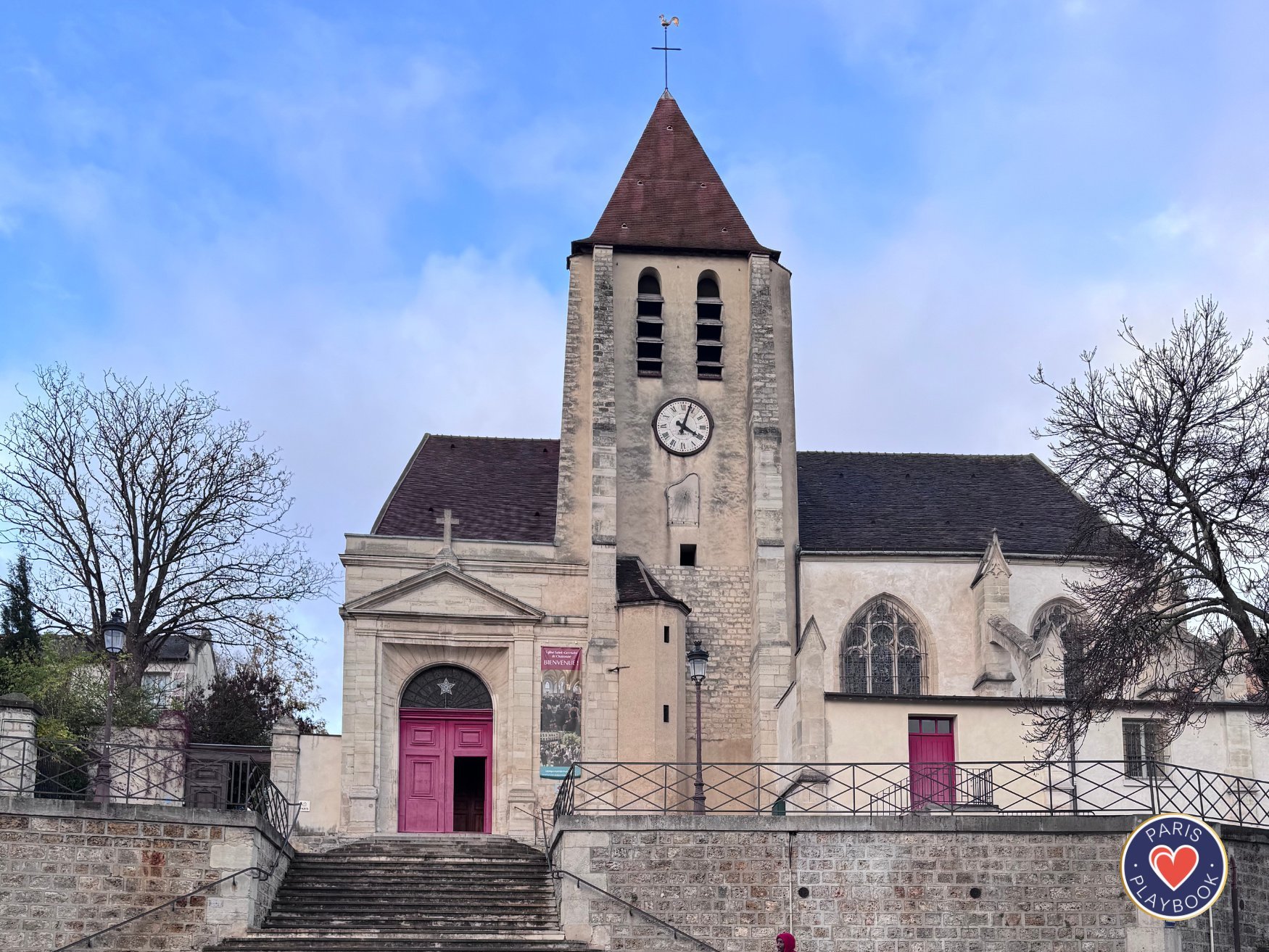
Tucked away in the 20th arrondissement, Rue Saint-Blaise feels like it belongs in a different century—maybe even a different country. Cobblestones, low houses with ivy-covered walls, a medieval church perched on a hill with its own cemetery. This was the high street of Charonne village before Paris swallowed it whole in 1860.
Most of the old village got bulldozed in the 1970s, replaced by tower blocks. But this stretch—from Place Saint-Blaise down to around number 38—somehow survived. It’s now one of only two streets in Paris (along with Rue Berton in the 16th) that still looks like 19th-century rural France.
The locals call it a quartier secret. They’re not wrong.
The Basics

Location: 20th arrondissement, between Père-Lachaise and Porte de Bagnolet
Metro: Porte de Bagnolet (Line 3) – 5-minute walk
Alternative: Alexandre Dumas (Line 2), then walk via Rue de Bagnolet
Best approached from: Porte de Bagnolet station. Exit toward Boulevard Mortier, walk up Rue de Bagnolet. I love that the street opens up dramatically as you reach Place Saint-Blaise and the church.
When to visit: Weekends for the village atmosphere when locals are out. Early June for the annual brocante (flea market) that takes over the street. Weekday mornings, if you want it quiet.
Time needed: 1-2 hours for a proper stroll, more if you’re stopping for lunch.
10 Things Not to Miss
1. The View from Place Saint-Blaise
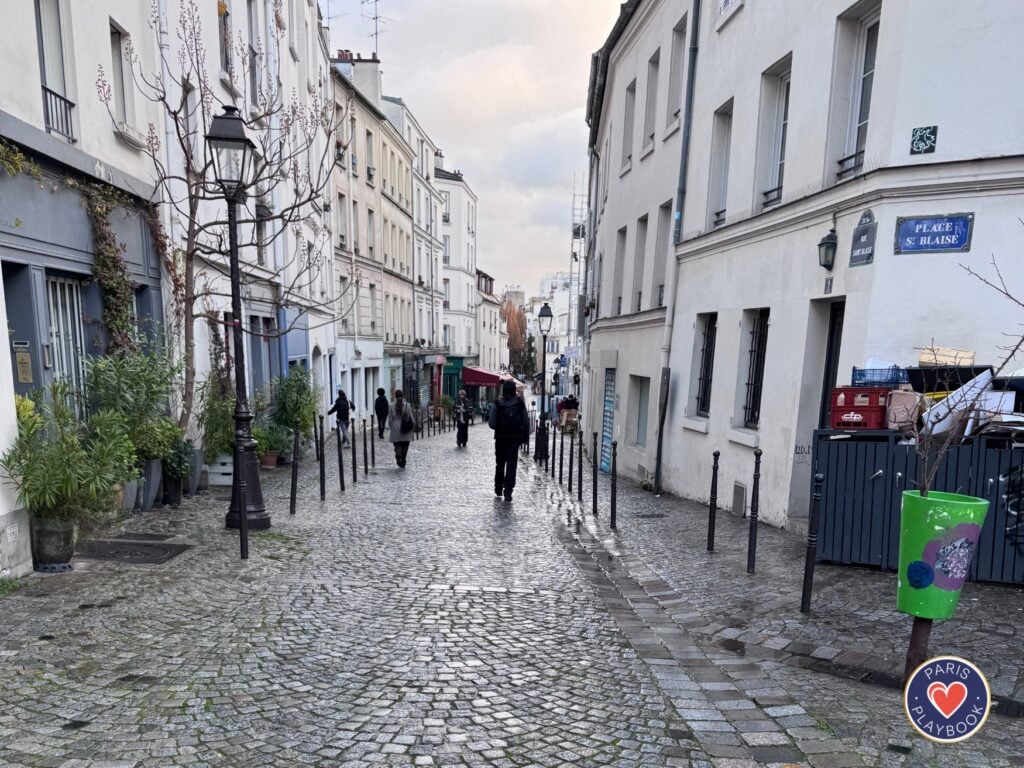
Stand at the top of the square, facing down Rue Saint-Blaise. The cobblestoned street slopes gently away, framed by low buildings and cafés, with the medieval bell tower of Saint-Germain-de-Charonne rising behind you. This is the shot—the one that makes you forget you’re in Paris. It looks like a provincial French town, maybe Provence or Burgundy, definitely not the 20th arrondissement.
2. Saint-Germain-de-Charonne Church
The church dates back to the 12th century (the bell tower and massive pillars), with additions from the 13th, 15th, and 18th centuries. Legend says it was built on the spot where Saint Germain of Auxerre met Saint Geneviève (Paris’s patron saint) around 430 AD. More recently, it’s famous as the location for the final wedding scene in Les Tontons Flingueurs, a cult French film from 1963. Inside, check out the painting attributed to Joseph-Benoît Suvée showing the legendary meeting of the two saints.
Address: 4 Place Saint-Blaise
3. The Parish Cemetery
Saint-Germain-de-Charonne is one of only two churches in Paris (the other is Saint-Pierre de Montmartre) that still have their medieval parish cemeteries attached. Most Paris cemeteries moved outside city limits in 1804, but Charonne’s escaped the decree because it was still technically a separate village. The cemetery, expanded in 1845 and 1859, holds over 650 graves in less than half a hectare, and became part of the Père-Lachaise administration when Charonne joined Paris in 1860. Peaceful, overgrown, impossibly atmospheric.
4. The Cobblestones and Courtyards
Rue Saint-Blaise is semi-pedestrianized with original cobblestones intact. As you walk, peek into the courtyards—especially number 21, which has an elegant porte cochère (carriage entrance) leading to a courtyard that feels frozen in time. Number 27 was once a building run by the Sisters of Charity. These aren’t reconstructions or theme park versions. They’re real.
5. The Neptune Mascaron at Number 46
Look up at number 46. Above the portal, you’ll see a carved mascaron (decorative face) of Neptune—the only surviving element of an 18th-century pleasure house. The original building was demolished and replaced during the development of Square de la Salamandre, but they kept this detail. It’s a reminder that wealthy Parisians used to build country homes here to escape the city air.
6. Square des Grès
At the intersection with Rue Vitruve sits this small square, the former main plaza of Charonne village. It’s surrounded by charming low houses that somehow dodged the wrecking ball. Sit on a bench, watch locals pass through, and notice how quiet it gets despite being surrounded by modern tower blocks. There’s a fountain here too—Place des Grès style, not Versailles style.
7. Café Lumière, Peppe, and the Terrace Scene
Café Lumière on Rue Saint-Blaise serves elegant bistro classics and has become the unofficial living room for the quartier. The owner says père Rémi, the priest from Saint-Germain-de-Charonne, brings his congregation here after Mass for post-baptism or wedding apéritifs. That’s the kind of neighborhood this is.
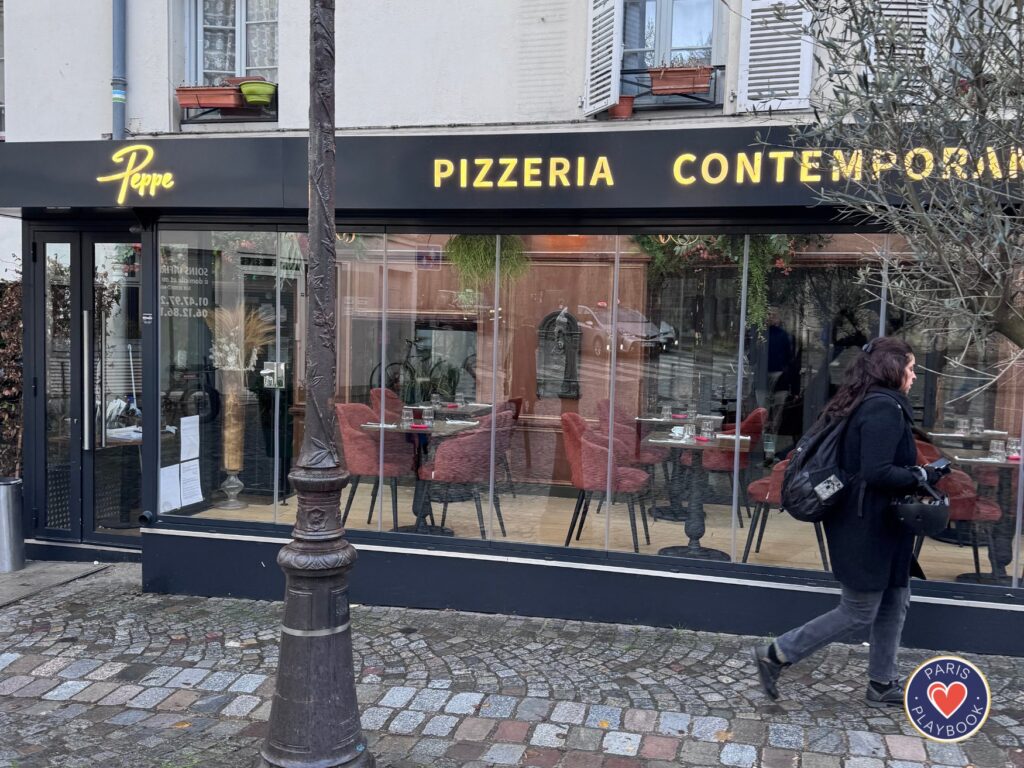
For pizza that locals queue for, hit Peppe—an award-winning spot that’s become something of a pilgrimage site for proper Neapolitan-style pies. The menu’s all in French, the staff will walk you through it, and everything coming out of that oven is worth ordering.
Other café terraces line the street—pick one on a nice day and watch the village life unfold.
8. The 18th-Century Porch at Number 85
Directly opposite number 85, there’s an elegant porch dating from the Louis XV era. These architectural details are everywhere if you look—carved doorways, old stones, iron railings that predate Haussmann by a century. The street is basically an open-air museum of pre-industrial Paris, just without the museum part.
9. The Modern Contrast
Don’t ignore the tower blocks visible from certain angles. The contrast is part of the story. In the 1960s-70s, most of Charonne was demolished because the old workers’ housing was falling apart. The southeast end of Rue Saint-Blaise has these massive modern buildings. The northwest end—the part everyone photographs—was saved, then forgotten, then finally restored in the 21st century as part of a major urban renewal project. The juxtaposition of old village and modern towers is jarring and oddly beautiful.
10. The Brocante in Early June
Every June, an annual flea market takes over Rue Saint-Blaise. Vendors set up along the cobblestones selling antiques, vintage clothing, old books, and random treasures. The whole neighborhood comes out. It’s crowded, chaotic, and precisely the kind of tradition that makes this feel like an actual village rather than a Parisian arrondissement.
Nearby: La Campagne à Paris
If you’re doing the full Charonne experience, walk to Porte de Bagnolet and find La Campagne à Paris—a hidden development of tiny brick houses built in the early 1900s for quarry workers. It’s even more surreal than Rue Saint-Blaise. Cobbled streets, gardens, pavilions with Virginia creeper climbing the walls. You’re five minutes from the périphérique, and it feels like deep countryside.
Access: From Place Saint-Blaise, walk toward Porte de Bagnolet, and find Rue Irénée-Blanc.
Why It Matters
Rue Saint-Blaise survived by accident. The buildings were too dilapidated to save but somehow escaped demolition until attitudes changed. By the time the city got around to it, historic preservation was a thing, and this stretch became protected.
What you see now is the last witness to rural 19th-century Paris. Before Haussmann, before industry, before the city became the city. Charonne was vineyards on a hillside, country homes for wealthy Parisians, a sleepy village with a medieval church. Then factories, then workers’ housing, then decay, then towers, then finally—this small preserved section that remembers what it used to be.
It’s not trying to be cute or attract tourists. The restaurants serve locals. The shops are normal neighborhood places. The church holds actual masses. People live here, raise families here, and have been here for generations. The village life that existed before 1860 somehow continues, just in miniature.
Walk it on a Sunday morning when church bells ring and families stroll to cafés. You’ll understand why the people who know about it call it a secret. Not because it’s hidden—it’s right there on the map. But because it feels like something Paris lost everywhere else.