
New Bike-Share Operator Undercuts Competition in Paris Price War
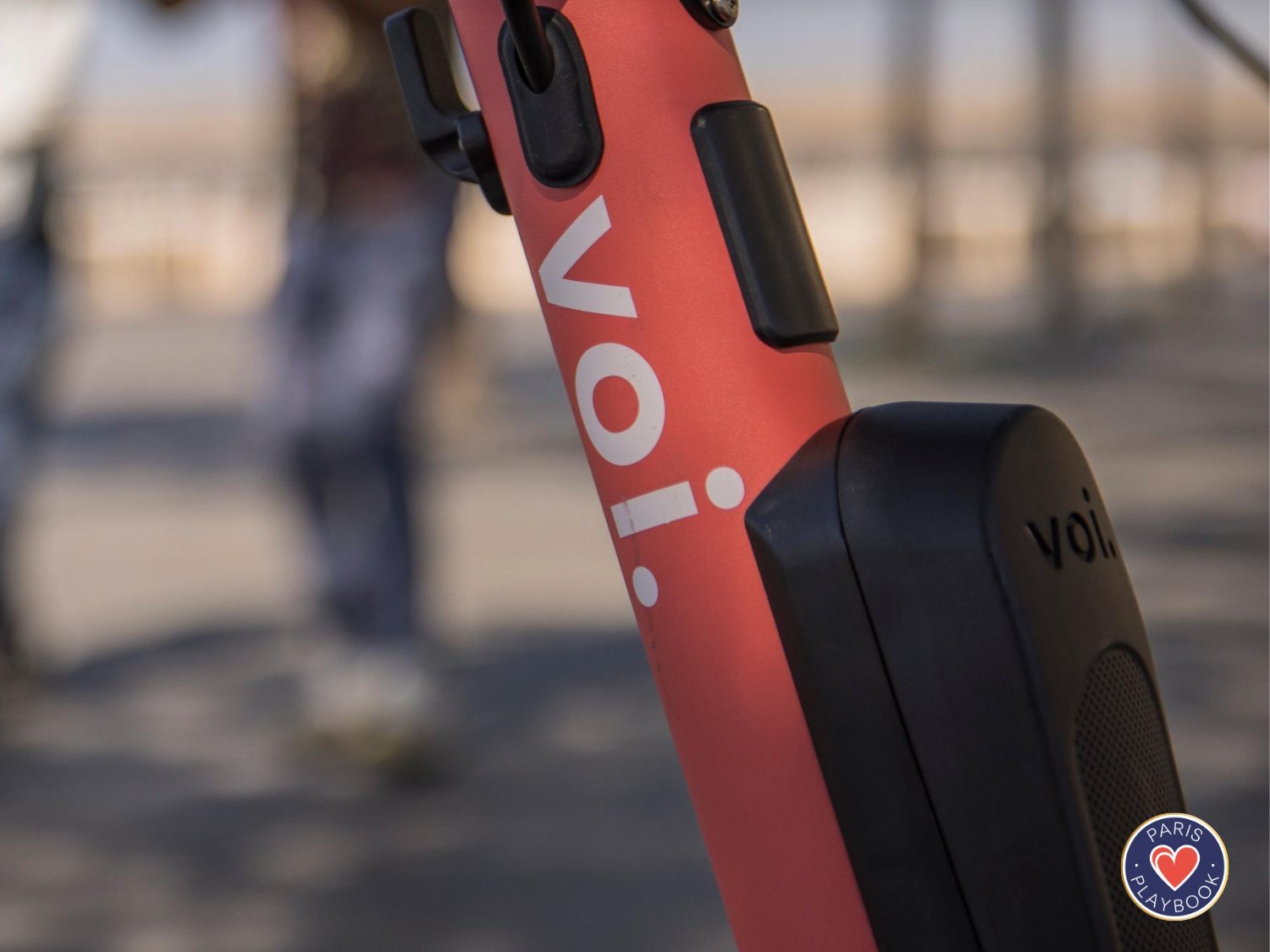
Paris just got 6,000 more bikes and a price war nobody asked for but everyone needed. Swedish company VOI officially launched in the capital on October 1st, joining Lime and Dott in the post-scooter era of Parisian micromobility.
The Price Play
VOI’s entire strategy appears to be “undercut everyone.” And it’s working on paper:
30-minute pass:
- Lime/Dott: €3.99
- VOI: €2.99
One hour:
- Lime: €6.99
- VOI: €5.49
Monthly subscriptions (200 minutes):
- Lime: €21.99
- VOI: €16.99
Monthly subscriptions (400 minutes):
- Lime: €39.99
- VOI: €31.99
The kicker? Your first three rides are free, and there’s no unlock fee. That’s a proper opening salvo.
18,000 Bikes Flood the Streets

Each of the three operators can deploy up to 6,000 bikes across Paris, increasing to 9,000 during busy periods. That’s 18,000 coral-orange, white-green, and whatever-color-Dott-is bikes competing for sidewalk space, on top of the existing Vélib’ system.
For context, Paris banned e-scooters in 2023 after a referendum. The city removed 15,000 scooters from the streets following public complaints about safety, parking chaos, and general sidewalk mayhem. Now they’ve replaced them with nearly the same number of shared bikes. Make of that what you will.
VOI’s Big Bet
This is VOI’s largest contract ever. The Swedish company already operates in London, Berlin, Brussels, Oslo, Helsinki, Vienna, and Stockholm, but Paris represents a significant milestone in its expansion.
CEO Fredrik Hjelm called it “the biggest, most competitive tender in our industry.” The four-year contract runs through 2029 and positions France as central to VOI’s European strategy, adding Paris to its existing French operations in Marseille, Grenoble, Le Havre, and Saint-Quentin-en-Yvelines.
New Parking Rules Nobody Will Follow
Starting October 1st, Paris implemented new parking regulations to prevent the bike congestion that plagued the scooter era. Here’s the bureaucratic breakdown:
- 1-3 bike racks (6 spots): No free-floating bikes allowed
- 4-5 racks: One bike per operator can park
- 6-8 racks: Two bikes per operator
- 9-11 racks: Three bikes per operator
- And so on, up to 26 racks, allowing six free-floating bikes
Deputy Mayor David Belliard explained this system to Le Parisien with the confidence of someone who has never watched Parisians park their bikes. Good luck enforcing mathematical parking ratios in the Marais at midnight.
The Vélib’ Question
All of this exists alongside Vélib’, Paris’s subsidized public bike-sharing system with hundreds of thousands of subscribers. A 45-minute Vélib’ ride costs €3. A 20-minute VOI ride costs €5.98 at their per-minute rate, though the subscription math changes that calculation.
Vélib’ requires docking stations. The free-floating systems don’t. That convenience factor is what VOI, Lime, and Dott are betting on—that Parisians will pay more for the flexibility of leaving bikes wherever parking rules theoretically allow.
What This Actually Means
For tourists and occasional riders, VOI’s pricing makes it the obvious choice. For daily commuters, the subscription offerings compete directly with Vélib’ passes, though the dock-based system still wins on cost for longer rides.
For sidewalk space? Prepare for more coral-orange obstacles in your walking path. The parking regulations sound good on paper, but Paris has a long history of bike-share parking being more “suggestion” than “rule.”
The four-year contracts also mean this isn’t a temporary experiment. These three operators are locked in through 2029, giving them time to either figure out profitable operations or burn through investor money trying.
The Bottom Line
VOI arrived in Paris, doing what newcomers typically do: offering aggressive pricing to capture market share. Whether they can sustain those rates while paying the €4 million annual operator fee to the city (up from €600,000 for previous contracts) remains to be seen.
For now, Paris residents and visitors have more bike-sharing options than ever, with prices that actually compete with one another. That’s good news for anyone tired of paying Vélib’ docking station fees or wanting to avoid the metro during rush hour.
The coral-orange bikes are already on the streets. Your first three rides are free. The city’s parking enforcement system seems optimistically complicated.
Welcome to Paris micromobility, 2025 edition.